
This week is America Saves Week. All over the country, individuals and organizations are using this week to rededicate themselves to saving and paying down debts. Many are worried about their retirement. These issues are especially important for single women. Women live longer and earn less than men; they are also more likely to remain single, to be widowed or divorced and vulnerable to poverty.
For America Saves Week, WISER has new resources for women who are going through a divorce or who have been widowed. WISER’s guide, “Divorce and Retirement: Take Control of the Retirement Benefits,” helps women navigate the complicated world of dividing retirement benefits at divorce, while “WISER’s Report on Widowhood” offers financial tips for widows of all ages.
Showing posts with label Savings. Show all posts
Showing posts with label Savings. Show all posts
Wednesday, February 25, 2009


Friday, February 6, 2009
Do You Qualify for the EITC?
Do you:
- Possess a valid Social Security number.
- Meet certain residency and filing criteria, including following guidelines for a qualifying child.
- Have an investment income that's no more thatn $2,950.
- Have a total earned income of at least $1 and and an earned income and adjusted gross income (AGI) that's less than:
- $12,880 with no qualifying child ($15,880 if married, filing jointly)
- $33,995 with one qualifying child ($36,995 if married, filing jointly)
- $38,646 with more than one qualifying child ($41,646 if married, filing jointly)
If you meet the criteria above, you may be eligible for the Earned Income Tax Credit (EITC). The EITC is a refundable credit for low and moderate-income taxpayers. If you qualify, you could pay less federal income tax, pay no tax or receive a refund. To find out if you're eligible for an EITC this year, visit the IRS website and use their eligibility tool. If you know you're eligible, find out how much your EITC will be for 2008.
Wednesday, February 4, 2009
Savvy Saver: Savings Tips and Tricks
America Saves week is just around the corner, making it a perfect time to talk about how to save. Money may be tight these days, but there are tips and tricks that can help you continue to contribute to your savings plan. Whether your putting away money for retirement, creating an emergency fund, or just trying to create a tighter day to day budget, these resources can help you work towards your savings goals.
Learn about the Savers's Tax Credit: The Saver's Tax Credit is a non-refundable tax credit for contributions to qualified retirement plans such as 401(k)s, IRAs and others. This credit is for low and middle income taxpayers and provides a credit between 10% and 50% of your retirement plan contribution each year, up to $2,000.00. Think you might qualify? Find out more by dowloading WISER's new fact sheet "The Saver's Tax Credit."
Consider a $50 a month – or more – automatic deduction from your paycheck or checking account to invest in a mutual fund or to buy U.S. Savings Bonds: The sooner you start the better! Investing early pays off because the interest compounds for more years.
Find out if you qualify for an Earned Income Tax Credit (EITC): Locate the Volunteer Income Tax Assistance office near you for free in-person tax help by contacting the IRS at: 800-829-1040 or visiting www.irs.gov.
Thursday, December 4, 2008
Money-Minded Gifts: Finance Books
Holiday gift shopping may be hurting more than your checking account this winter. A new study shows that Christmas shopping increases blood pressure to dangerous levels in 50% of holiday shoppers. When researchers tested men and women after having them buy gifts, women were three times more stressed than they had been before shopping.
It's hard enough to try to find the perfect gift, and braving crowds and cold weather can make shopping feel especially stressful. When you combine these factors with a tighter budget, it's no wonder that shoppers' heart rates increase by 10% while shopping during the holiday season . But if you're feeling financial pressure, chances are the people you're shopping for are experiencing similar money-related stress. So why not channel your shopping anxiety into a helpful, money-minded gift? This w eek, we're taking a look at finance books. In 2008, 52% of consumers' New Years resolutions were related to getting out of debt. Help your friends and family get a jump start on improving their financial situations by giving them a personal finance book this holiday season.


It's hard enough to try to find the perfect gift, and braving crowds and cold weather can make shopping feel especially stressful. When you combine these factors with a tighter budget, it's no wonder that shoppers' heart rates increase by 10% while shopping during the holiday season . But if you're feeling financial pressure, chances are the people you're shopping for are experiencing similar money-related stress. So why not channel your shopping anxiety into a helpful, money-minded gift? This w
 eek, we're taking a look at finance books. In 2008, 52% of consumers' New Years resolutions were related to getting out of debt. Help your friends and family get a jump start on improving their financial situations by giving them a personal finance book this holiday season.
Get a Financial Life: Personal Finance in Yours 20s and 30s by Beth Kobliner:
This book is a smart choice for any person who is new to managing her finances or who is interested in managing her finances in a more responsible way. Get a Financial Life is exceptionally thorough but never dull or overwhelming. For the most time-strapped readers, Kobliner offers a "Financial Cramming section" at the end of each chapter to summarize the chapter's most important ideas.

The Number: A Completely Different Way to Think About the Rest of Your Life by Lee Eisenberg
The number is a less a retirement guide than a reflection on issues facing the aging population. Eisenberg is a journalist, not a financial planner, but his experience writing on the topic is evident. According to Eisenberg, everyone should be thinking about his or her "Number," which is the amount of money required to meet an individual's expectations for life in retirement.
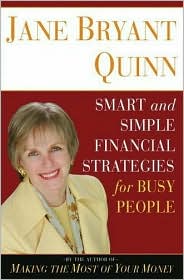
Smart and Simple Financial Strategies for Busy People
by Jane Bryant Quinn
Jane Bryant Quinn is informative and charming in this book. She covers all the bases, but perhaps the most helpful chapter is "Putting Your Whole Financial Life on Cruise Control"-- the idea being that money saved automatically is less likely to be spent frivolously. Shifting to automatic saving can save you both time and money. Quinn's personal stories of struggling with debt make this both an enjoyable and worthwhile read.
Next Week's Money-Minded Gift: Online Savings Accounts (coming Thursday)
Bags of Stress: Why Christmas Shopping is Bad for Your Health via The Daily Mail Online
2008 New Year's Resolutions Signal Shift in Consumers Priorities via MyGoals.com
Monday, December 1, 2008
Savings Tools
Need a little help putting money aside this holiday season? Try one of these handy online tools and create a savings plan that works for you.
CNN Money Savings Calculator: This tool calculates your savings by having you answer a brief series of questions about your taxable accounts, tax-deferred accounts and projected rate of return/time frame. Quick and simple, this calculator offers you an estimate on how much you will save as well as a variety of other retirement savings related tools.
Mint: Mint.com touts itself as "the best free way to manage your money." Wall Street Journal seems to agree with this assessment, calling Mint "a pleasure to use." Mint offers you tools to help save for retirement, pay off your debt, and save for long term goals. By entering your information, this personal finance software automatically downloads and categorizes your credit card transactions nightly to help you identify your spending trends.
Choose To Save calculators: EBRI's Choose to Save campaign has a page chock full of calculators to help you save, as well as tools to assist you with your employee benefits, insurance, Roth IRAs and more. They also recommend their favorite savings calculators from other sites such as Motley Fool and FINRA.
Friday, November 28, 2008
Budgeting in a Spending Season
Thanksgiving is over and the giving season has just begun. Today's unofficial holiday, Black Friday, kicks off the holiday shopping season with a wide variety of retailers offering huge savings on high ticket items. Unlike the tamer Thanksgiving week traditions, such as the Macys Thanksgiving day parade or the traditional Thanksgiving feast, Black Friday is marked by epic lines at local stores and chaotic masses of shoppers, many of whom are willing to wake up before dawn for doorbuster deals and prime access to the soon to be out-of-stock sale items.
It's hard to remember anything when you're rolling out of bed at 5am, still drowsy from last night's turkey paired with a lack of shut-eye. But it's especially hard to remember your budget. Maybe that budget amnesia accounts for these poll results: according to the Washington Post, half of the respondents to a poll early last year said they would carry their holiday credit card debt into spring. And this was before the current economic slump. So how do you stop yourself from overspending this holiday season? Why not give yourself a few gifts before you start shopping for everyone else:
Gift 1: A Budget
I know, it's scary. When there are people to shop for, holidays parties to attend, even holiday parties to throw, you may not want to have your financial reality mapped out in front of you when you could have a piece of pie and a healthy slice of ignorance instead. But soon enough it will be January, the month of New Years resolutions and no more holiday splurge excuses. So why not get a head start and make a budget now? Include holiday gifts and get a better idea of how much you can spend this holiday season. You can use WISER's budget worksheet to get you started. For help on keeping track of your spending, check out WISER's "Keep Track of Your Spending" Fact Sheet.
Gift 2: A Low-Interest Credit Card
Look for low-rate and no annual fee credit cards. You can get a list of credit cards, interest rates and fees: send $5 to RAM Research’s CardTrak,P.O. Box 1916 , Frederick , MD 21702
Gift 3:A Free Credit Report
Get a better idea of your credit situation, for free! As of September 2005, all US Citizens are eligible for one free credit report from each credit agency per year. To receive your free annual credit report visit www.annualcreditreport.com or call 1-877-322-8228. This can help you improve your credit and set some long term financial goals.
Gift Trapped? [Washington Post]
Tips for Reining in Holiday Giving [Washington Post]
It's hard to remember anything when you're rolling out of bed at 5am, still drowsy from last night's turkey paired with a lack of shut-eye. But it's especially hard to remember your budget. Maybe that budget amnesia accounts for these poll results: according to the Washington Post, half of the respondents to a poll early last year said they would carry their holiday credit card debt into spring. And this was before the current economic slump. So how do you stop yourself from overspending this holiday season? Why not give yourself a few gifts before you start shopping for everyone else:
Gift 1: A Budget
I know, it's scary. When there are people to shop for, holidays parties to attend, even holiday parties to throw, you may not want to have your financial reality mapped out in front of you when you could have a piece of pie and a healthy slice of ignorance instead. But soon enough it will be January, the month of New Years resolutions and no more holiday splurge excuses. So why not get a head start and make a budget now? Include holiday gifts and get a better idea of how much you can spend this holiday season. You can use WISER's budget worksheet to get you started. For help on keeping track of your spending, check out WISER's "Keep Track of Your Spending" Fact Sheet.
Gift 2: A Low-Interest Credit Card
Look for low-rate and no annual fee credit cards. You can get a list of credit cards, interest rates and fees: send $5 to RAM Research’s CardTrak,
Gift 3:A Free Credit Report
Get a better idea of your credit situation, for free! As of September 2005, all US Citizens are eligible for one free credit report from each credit agency per year. To receive your free annual credit report visit www.annualcreditreport.com or call 1-877-322-8228. This can help you improve your credit and set some long term financial goals.
Gift Trapped? [Washington Post]
Tips for Reining in Holiday Giving [Washington Post]
Thursday, November 27, 2008
Happy Thanksgiving from WISER!
Looking for a gift idea you can feel good about? Well look no further than I Savings Bonds. One thing to be thankful for today is the new and improved interest rate on I Savings Bonds. While I Savings Bonds were earning 4.28% this time last year, the interest rate has increased to a whopping 5.64% through April 30, 2009. I Savings Bonds are government-issued bonds that earn interest each month, and the interest is compounded every six months. The I Bond is currently providing a higher return than the EE Bond. Since becoming available, the I Bond has been very popular; sales of over $3.2 billion were reported in the first year.
Here are a few things you should know about the I Bond:
Here are a few things you should know about the I Bond:
- You can buy I Bonds at face value; for example, you would pay $50 for a $50 bond.
- Earnings are exempt from state and local income taxes
- Federal income taxes can be deferred for up to 30 years, or until you cash them in, whichever comes first.
- You can earn interest on them for up to 30 years and can cash them out after 5 years without losing interest (You will lose three months' interest if you cash them in sooner.)
- You can now buy savings bonds with automatic deductions from your checking or savings account on a regular basis through the Easy Saver plan, or on the Internet.
Tuesday, November 18, 2008
Job Security and Young Professionals: Staying Smart During an Economic Downturn
Millenials, persons born between those of Generation X and those of Generation Y, are starting to trickle out of the university arena and into the workforce. Unfortunately for this demographic, which amounts to about 76 million adults, today’s work force is currently bearing the brunt of an economic crisis. According to a survey by Accenture Limited, 46% of U.S. middle managers said that, because of the current state of the economy, “switching employers in the current environment is risky.” Figures such as these have begun to reach the ears of millenials, causing many of them to become reluctant to change job positions.
According to David Smith, the managing director of talent and organization performance at Accenture, a global consulting company, “It’s unclear whether a different employer will be able to provide sufficient job security, training, advancement opportunities, and other benefits” given the current economic climate. Young professionals who know that lay-offs often abide by a “last in, first out” policy and have become less inclined to seek new positions.
If you are a young professional considering joining a new company or firm, there are a number of ways in which you can guard yourself against less than lucrative job opportunities. Following the steps below may help you face career transitions proactively.
1. Ask questions. When you receive a job offer from a prospective employer, make sure that you employ the interrogation method. Some examples of questions that you may want to consider asking include: 1) How is your company’s turnover rate?, and 2) What criteria do you use when making layoffs?
2. Do research. While you may ask questions of your prospective employer, there is some information that may be omitted via direct questioning. As such, you may benefit from researching articles on the Web or in newspapers that may shed light on the company’s financial history. Public companies are required to make their 10-L filings, documents that offer figures on the performance of a company, publicly available. These filings can be found with the Securities and Exchange Commission.
3. Start saving. Because of the precarious state of the economy and the workforce, it is imperative that you start safeguarding your finances as soon as possible. In the event that you find your job transition is not running as smoothly as you wished, it helps to have some money saved up that you can rely on. For tips on saving and investing, browse through WISER's "Saving & Money Management Basics" fact sheets.
Professional millenials, in the infancy of their careers, should carefully weigh the pros and cons of job transitions during the current economic crisis. If you do decide to accept a position with a new employer, adhering to the steps above may help you make the smartest maneuver possible.
Thursday, October 23, 2008
Young Women and Savings: Save Early, Finish Strong
As a young woman, it's easy not to save for retirement. Student loan payments, rent, and that pesky college credit card debt all have to be paid off monthly, while retirement seems like something that is light years away. "Sure," you think, "I'll save for it, once the loans are paid off, next month's rent is taken care of, oh and after that vacation next summer..."
There will always be other expenses that seem more urgent than saving for retirement. In the next few years, you may finish paying off those loans, but replace them with graduate school tuition or a mortgage, and it will still feel easier to put off saving for another time. When it comes to retirement savings, the earlier you start, the more impact your savings will have on your future retirement security. If you put aside $500.00 a year from age 22-30 you'll save $4,500 dollars. Okay, so that doesn't seem like enough to retire on--but wait! If you put that money in a tax-deferred retirement plan at an average rate of return of 6%, you'll come out with $63, 918 dollars.
The point is, you don't have to save a ton at this point in your life, but it is important to make sure that you're saving. Here are a few tips for young workers to get you started from the National Save for Retirement week website:
- Start now: Most people join the workforce soon after they graduate from high school or college, but research shows that many neglect to save for retirement. According to a survey conducted by the Employee Benefit Research Institute, 41 percent of workers between the ages of 45 and 54, have less than $25,000 in total savings and investments.Thirty-nine percent of workers aged 55 and older also total savings of less than $25,000.
- It all adds up. Skip one trip to the corner deli each week or forgo that $5 bucket of popcorn at the movies. It’s a simple way to free up a little extra money every week. Even $5 to $10 a week makes a big difference, if you start now. Starting early could give you 20-30 years of opportunity for investment earning, which can really add up over time.
- Pay yourself first. Be sure to take advantage of your employer-sponsored retirement plans. One advantage of saving through your employer-sponsored retirement plan, is that the money goes to savings before you have a chance to spend it. An added benefit is that you are saving pre-tax, which means you get the full dollar benefit of the money you save and reduce your taxable income at the same time.
Monday, October 20, 2008
National Save for Retirement Week: 3 Ways You Can Celebrate
It's that time of year again. The air is growing cooler, Halloween is approaching in all its candy coated glory, and soon the holiday season will be upon us. Before you get swept up in the upcoming winter holiday spirit, take some time to celebrate a week dedicated to protecting your financial future. October 19th kicked off the beginning of National Save for Retirement Week! This week represents the first Congressional effort to encourage Americans to save more for retirement. By retirement age, women are twice as likely as men to be poor and millions will confront their older years with scarce if any savings. Give yourself the ultimate gift, before the holidays wear on your wallet, by starting a savings plan now. Here are three tips to help you get in the National Retirement Week spirit:
1. Join a Savers Club: The American Savings Education Council (ASEC) has local chapters throughout the country that can assist you in meeting your savings needs through free events, tips, newsletters and club meetings. The DC Saves chapter features testimonials from other Savers on their website as well as targeted savings plans that can help you get out of debt, save for a home, or create an emergency fund. Visit ASEC's website to find a chapter near you or for more savings tips.
2. Try a Retirement Savings Calculator: ICMARC has created a page filled with retirement calculators and worksheets in honor of Retirement Savings Week. WISER features a retirement calculator on the WISER website which is accompanied by a Retirement Calculators fact sheet that can help you get started with your retirement savings plan. For more retirement calculators, read "Retirement Calculators: Predicting Your Future Income" or visit the FINRA website for an additional retirement calculator resource.
3. Learn About the Saver's Credit: The Saver's Credit is a non-refundable tax credit that's eligible for tax-payers who set aside part of their pre-tax income in employer sponsored retirement plans and traditional and Roth IRAs. Are you eligible? Learn more here.
Want More? Check back Thursday for a special National Save for Retirement week post from our Young Woman's Financial Planning Guide series!
Monday, September 29, 2008
How to Start Saving
No matter how much debt you're in, no matter how old you are, no matter what's happening this week on Wall Street, it's never too late to start funding your future by creating a savings plan. It's easy to put off saving for the future because of current bills and expenses. But don't let your current financial situation stop you from setting savings goals: close your eyes, hold your nose, and put that money aside for yourself.
Understand where your money is going now: Write down everything you spend money on for a few months. You may think about carrying a small notebook to record cash purchases and an envelope for credit and debit card receipts. Cellphones also often have a "Notes" function where you can record recent purchases. Put all of your spending information together on WISER's Budget Sheet to find out what your expenses are for an average month. By tracking your spending, you can look for ways to reduce your expenses and relocate that money into savings.
Make a plan to save a certain amount each month: Plan to put a certain amount of money or percentage of your income into savings every month. Set savings goals and make sure to stick to your plan. Once you start saving and stick to it, you won't even miss that money.
Reduce your credit card debt: Monthly credit card bills can tie up money that you could be saving. The Institute of Consumer Financial Education can help you find ways to lower your debt. If you want to continue using a credit card, but you're tired of high interest rates, visit http://www.blogger.com/www.cardweb.com for information on how to find the best low-interest credit cards.
Subscribe to:
Posts (Atom)

